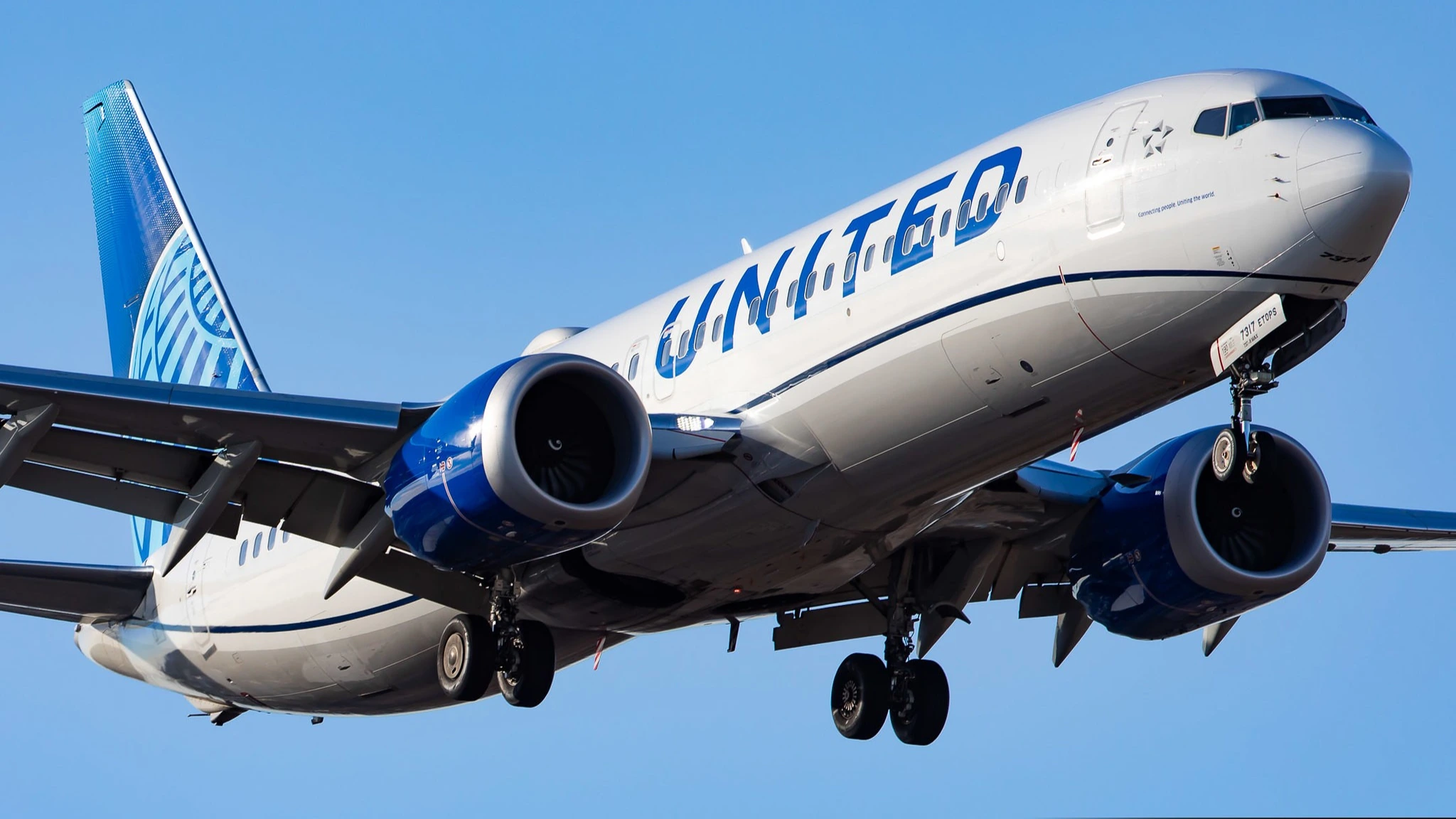
CHICAGO — Before departure, United Airlines flight UA471 from San Antonio International Airport (SAT) to Washington Dulles International Airport (IAD) was caught up in a routing dispute. At issue was an air traffic control (ATC) proposal that appeared to direct the Boeing 737-700 through the heaviest rain and thunderstorms, a proposal the pilots questioned, requesting their original route around the storm instead.
United’s dispatch team, whom the crew consulted, supported their decision, and ATC subsequently approved an alternative routing; the aircraft landed without incident.
The incident is reported to have occurred on a Friday, though the original report did not go as far as confirming the exact date. It was as the aircraft pushed back from the gate and taxied towards the runway that the flight crew questioned the routing provided by ATC. Initially assigned a route south of the severe weather system, the aircraft was then presented with a revised proposal that would have taken it through the heaviest rain and thunderstorms.
Refusing to accept the proposed route, the pilots cited the challenging weather conditions and their potential impact on passengers and crew; the crew, the pilot informed ATC, would consult United dispatch before proceeding. According to the pilot on the recording, the proposed routing could have meant up to four hours in challenging weather conditions and would have added almost an hour to a flight whose usual duration is two hours and 45 minutes.
Dispatch backs the crew
Once the proposed clearance had been questioned, the pilots turned to United’s dispatch team to discuss the weather conditions and the routing options open to them. Dispatch not only supported the crew’s concerns but also agreed that the aircraft should not be flown through the adverse weather along the proposed route. It was on this basis that the pilots requested permission to revert to the original southbound routing, which would take the aircraft around the thunderstorm system.
Having reviewed the request, ATC approved an alternative flight path, and the aircraft was subsequently cleared to avoid the worst of the weather. According to Simple Flying, which contacted United on Saturday, the airline confirmed that the flight had landed safely.
Pilot-in-Command Holds Final Authority
What the incident brings into focus is the authority, and the responsibility, that rests with the pilot-in-command (PIC) in commercial flight operations. 14 CFR §91.3 vests in the PIC both direct responsibility for, and final authority over, the operation of the aircraft. The FAA further states that an ATC clearance does not authorise an unsafe operation: should a proposed clearance risk placing an aircraft in jeopardy, the onus is on the pilot to request an amended clearance.
In domestic airline operations, 14 CFR §121.533 sets out a framework of shared operational responsibility between the PIC and the aircraft dispatcher. Dispatchers, for their part, monitor flights and provide safety information; they also have the power to cancel or redispatch a flight should they or the PIC believe that it cannot be operated safely as planned.
In this instance, the pilots’ handling of the situation (questioning the proposed routing, obtaining the backing of dispatch and working with ATC to secure an alternative) demonstrates how flight crews and airline operations teams can work with air traffic controllers to address weather-related safety concerns.
United Airlines’ San Antonio Flight Network
From San Antonio International Airport (SAT), United Airlines and United Express operate scheduled services to a number of major destinations across the United States, among them those listed in the original report:
Chicago O’Hare International Airport (ORD)
Denver International Airport (DEN)
George Bush Intercontinental Airport, Houston (IAH)
Newark Liberty International Airport (EWR)
San Francisco International Airport (SFO)
Washington Dulles International Airport (IAD)
The UA471 incident underlines how much hinges on operational coordination when severe weather affects planned flight routes. ATC may manage aircraft movements and issue clearances, but responsibility for assessing the safety of the aircraft, and for requesting suitable alternatives where necessary, remains with the pilots.